


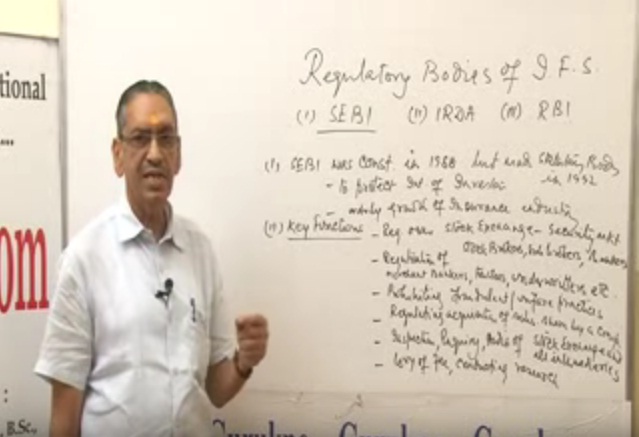

SEBI as Regulatory Body in Indian Financial System
SEBI is key regulatory body for capital market in the country. All new issues of shares, debentures, bonds and all intermediaries operating in capital market are subject to control by SEBI.

Faculty: Law Post Graduate Diploma In Labour Law(PGDLL)Model Papers Sr. No. Paper Name Question Paper Link 1 Labour Jurisprudence and the International Labour Organization(I.L.O.) Click Here 2 Labour Law Labour Welfare, …
Faculty: Law LLB II Year(III Sem.)Model Papers Sr. No. Paper Name Question Paper Link 1 Bhartiya Nagrik Suraksha Sanhita Click Here
Faculty: Law B.A. LL.B VII Semester Model Papers Sr. No. Paper Name Question Paper Link 1 Property Law Click Here
SEBI is key regulatory body for capital market in the country. All new issues of shares, debentures, bonds and all intermediaries operating in capital market are subject to control by SEBI.

This is a part of lecture presented by Varsha Sharma, Asst. professor of Biyani Girls College. The video is about beta estimation. Beta as the tendency of a security’s returns to …